
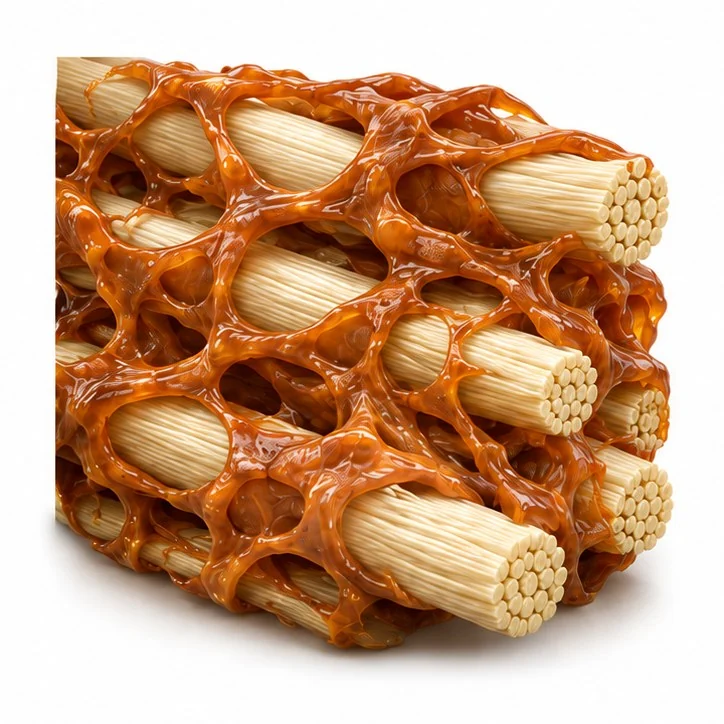
01
Lignin-rich biomass
Lignin surrounds and binds cellulose fibers in the plant cell wall.
Nanozyme catalysis makes cellulose-rich fiber more accessible, with a magnetic catalyst that can be recovered and reused.
Nanozymes are nanomaterials with intrinsic enzyme-like activity. Our catalysts have laccase-like and peroxidase-like activity that oxidatively attacks the lignin network of plant cell walls.
The treatment removes up to 50% of the lignin in lignocellulosic biomass, opening the fiber for downstream processing.
A treatment stage between feedstock preparation and your downstream fiber or energy process.
Lignin surrounds and binds cellulose fibers in the plant cell wall.
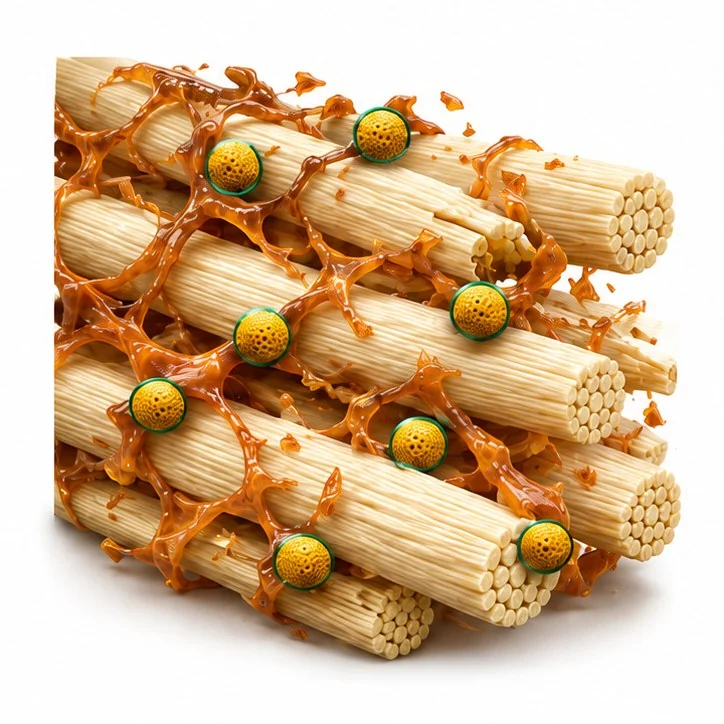
Laccase-like and peroxidase-like activity acts on the lignin network.
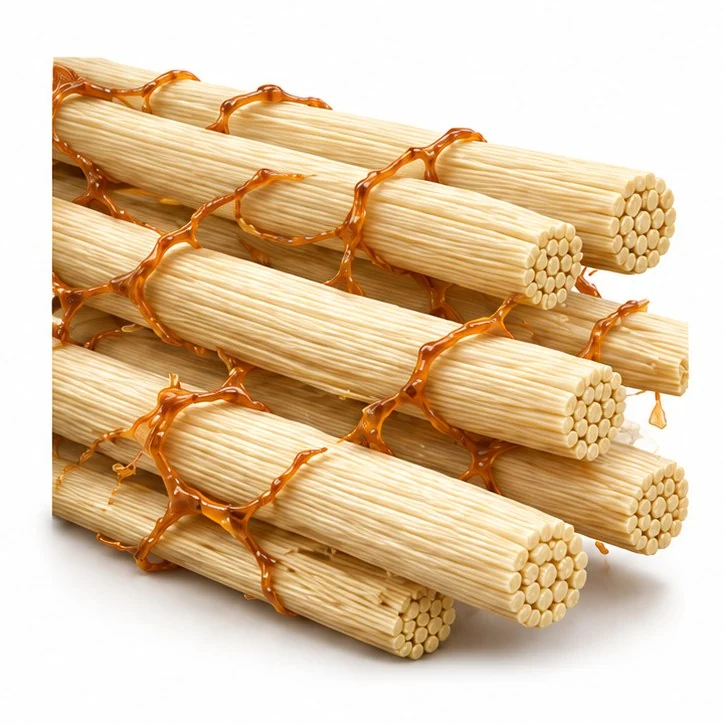
Up to 50% lignin removal creates a cellulose-rich fiber stream.
Conceptual mechanism illustrations. After treatment, a magnetic field separates the nanozyme from the slurry for recovery and reuse.
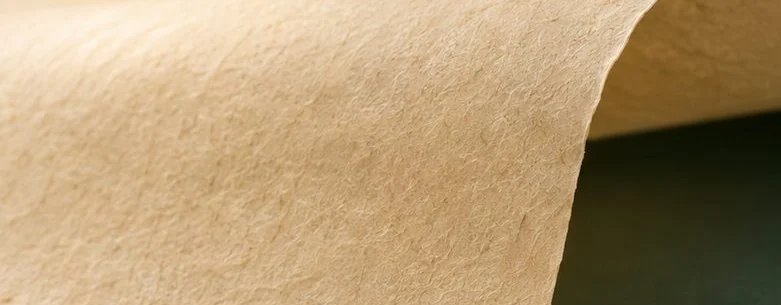
Straw-fiber handsheets produced in the laboratory demonstrate a breaking length of 6.2 km.
We work with partners to evaluate the fiber against their own product specifications and production conditions.
The nanozyme separates from the slurry in a magnetic field and can be reused across batches.
Our black liquor is easy to treat and environmentally friendly. Liquor treatment is considered as part of the integrated process.
The core nanozyme route uses enzyme-like catalysis without sulfur chemistry or strong-alkali cooking of the biomass.
Straw, bamboo and wood residues can be evaluated as additional fiber sources near your mill.
Choose a standalone nanozyme delignification route or a pretreatment stage ahead of an existing chemical line.
Use nanozyme treatment as the delignification stage in your biomass-to-fiber process.
Add a treatment stage upstream of chemical delignification to reduce the lignin load.
| Process aspect | Conventional chemical pulping | NanoZymBio core route |
|---|---|---|
| Chemistry | Strong alkali or sulfur-based cooking, depending on the process | Enzyme-like catalysis without strong-alkali cooking |
| Black liquor | Liquor handling and recovery depend on mill configuration | Environmentally friendly black liquor that is easy to treat |
| Catalyst recovery | Cooking chemicals recovered through the mill’s chemical cycle | Nanozyme catalyst recovered magnetically and reused |
| Feedstock | Selected for the mill’s established pulping process | Process development for locally available biomass |
Tell us about your feedstock and production process. We’ll identify where nanozyme technology can add value.